June 2026

Importance of a Good Night's Sleep

Having trouble sleeping? You're far from alone. According to the Sleep Health Foundation, disrupted sleep is a common issue for a significant proportion of Australian adults.

Quality sleep is one of the foundations of good health, it's when your body repairs, restores and recharges. So let's look at why it matters, and some practical ways to help you get more of it.
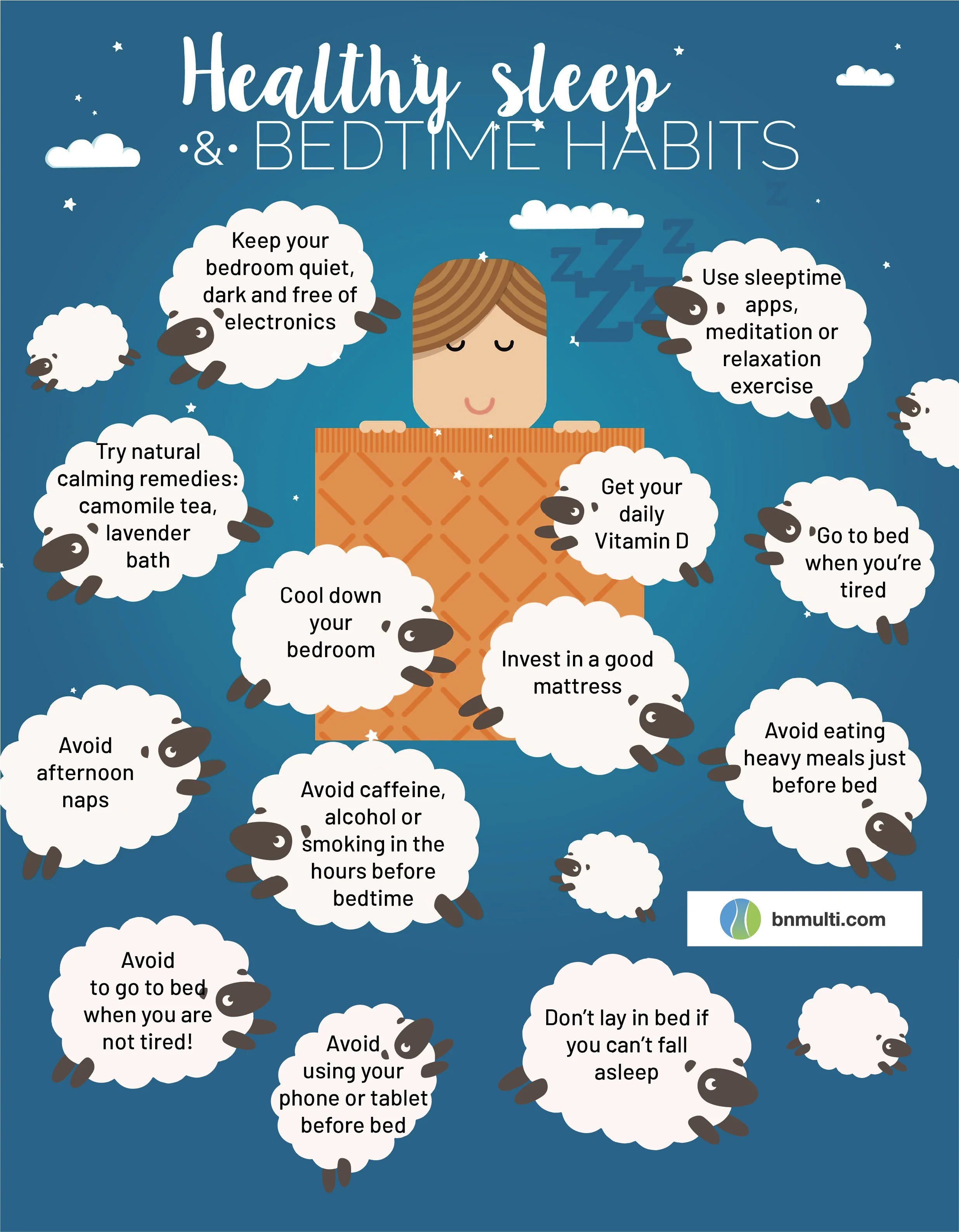
Tips for a Better Night's Sleep

Create a calm environment: keep your bedroom quiet, soothing and restful

Try a sleep app: apps like Calm offer meditation, relaxation exercises, sleep stories and soundscapes to help settle your mind

Go to bed when you're tired: tune into your body's natural signals for rest

Reserve your bedroom for sleep and intimacy: not as a second lounge room

Get some morning sunshine: early daylight supports your natural body clock (and your vitamin D)

Cool the room down: a cooler bedroom is easier to sleep in

Try naturally calming rituals: a lavender bath or a chamomile tea before bed

Invest in a good mattress: you spend a third of your life in bed, so it's worth it

Avoid heavy meals close to bedtime

Things That Might Be Keeping You Awake

Caffeine, alcohol or smoking in the hours before bed

Afternoon naps: save your sleepiness for night-time

Going to bed wired: wind down first with some of the tips above

Screens in bed: turn devices off at least 30 minutes before bed

Lying awake: if sleep won't come, get up, have a chamomile tea or read a book, then try again

Clock-watching: seeing the minutes tick by only adds to the stress

How Magnesium Supports Restful Sleep

If winding down at the end of the day is a struggle, supporting your magnesium intake may help, because magnesium plays an important role in the body's natural relaxation processes.

Magnesium contributes to normal nervous system function and helps the body shift from a state of alertness toward calm. By supporting healthy nervous system function and muscle relaxation, it can help create the conditions your body needs to unwind at the end of the day, which is why magnesium is so often associated with rest and relaxation.

Modern diets, busy lifestyles and stress can all increase the body's demand for magnesium, sometimes making it harder to maintain adequate levels through food alone. In those cases, a quality magnesium supplement (particularly a gentle, well-absorbed form like magnesium glycinate) can be a practical addition to a calming evening routine.

The Bottom Line

Good sleep rarely comes down to one single thing, it's the sum of consistent habits, a restful environment, and supporting your body nutritionally. Start with a few of the tips above, be patient, and give the changes time to take effect.

If sleep difficulties are persistent or significantly affecting your quality of life, it's always worth discussing with your healthcare provider.

Always read the label and follow the directions for use. If symptoms persist, talk to your health professional.

Jacqui Lewis
BHSc Nutritional and Dietetic Medicine

Related Products

Transformation Starter Pack

BN Slim Meal Replacement Variety Pack

BN Magnesium Glycinate - Pure Powder